
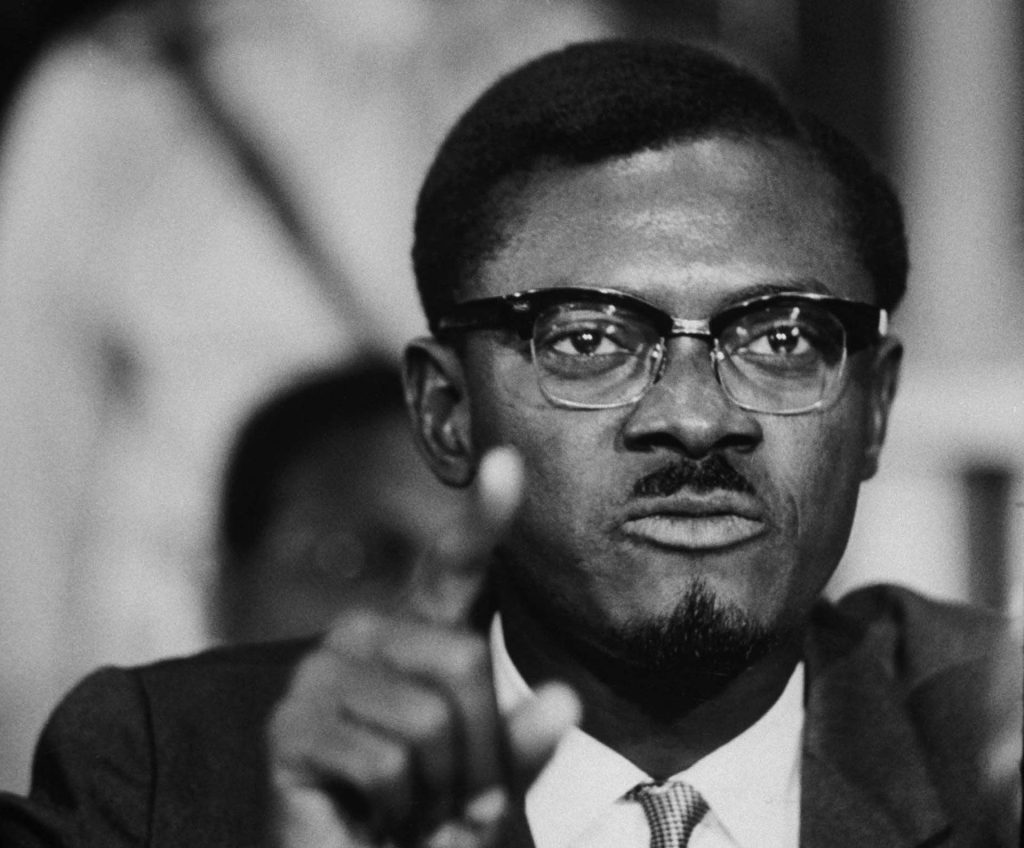
| Full Name | Patrice Émery Lumumba (born Élias Okit’Asombo) |
| Date of Birth | July 2, 1925 |
| Place of Birth | Onalua, Kasai Province, Belgian Congo |
| Date of Death | January 17, 1961 |
| Age at Death | 35 |
| Nationality | Congolese |
| Occupation | First Prime Minister of the Democratic Republic of the Congo |
Patrice Lumumba was the first legally elected prime minister of the Democratic Republic of the Congo, leading the country to independence from Belgium in 1960. He is historically vital as a fierce advocate for Pan-Africanism and a unified, non-ethnic Congo. His brutal assassination less than seven months after taking office transformed him into a global martyr of the anti-colonial struggle and highlighted the devastating impact of Cold War proxy politics on newly independent African nations.
Cause of Death
Patrice Lumumba was executed by a firing squad on January 17, 1961, in an isolated clearing near Élisabethville (now Lubumbashi) in the secessionist province of Katanga.
The official cause of death was execution by gunfire. Lumumba, alongside two of his political allies—Maurice Mpolo (Minister of Youth and Sports) and Joseph Okito (Vice-President of the Senate)—was shot in the presence of Katangese officials and Belgian officers.
The events immediately leading to his death involved a complex web of betrayal, capture, and torture. After being ousted from power in a western-backed coup, Lumumba was placed under house arrest in the capital, Léopoldville (now Kinshasa). He escaped in late November 1960, attempting to reach his political stronghold in Stanleyville (Kisangani). He was captured on December 1 by troops loyal to Colonel Joseph-Désiré Mobutu (later Mobutu Sese Seko) .
For weeks, Lumumba was held in military barracks in Thysville, where he was repeatedly beaten. Fearing a mutiny by soldiers sympathetic to Lumumba, Mobutu (later Mobutu Sese Seko) and the central government, with the active encouragement and logistical support of Belgian authorities and the American CIA, transferred Lumumba to Katanga on January 17, 1961. Katanga was a breakaway state led by Moïse Tshombe, a bitter rival of Lumumba, who was heavily backed by Belgian mining interests and military personnel.
During the flight to Katanga, Lumumba and his allies were severely beaten by their guards. Upon arrival in Élisabethville, they were driven to a colonial villa, Villa Brouwe, where they were tortured for hours by Katangese soldiers and ministers, as well as Belgian officers.
That evening, a Belgian police captain, Julien Gat, ordered the prisoners to be taken into the bush. The firing squad was commanded by Gat and another Belgian officer, while the shooters were Katangese soldiers. Lumumba, Okito, and Mpolo were lined up against a tree and shot one by one.
To prevent the graves from becoming a pilgrimage site, the bodies were exhumed the following day. A Belgian police commissioner, Gerard Soete, and his brother hacked the bodies to pieces and dissolved them in sulfuric acid provided by a Belgian mining corporation. The physical remains of Lumumba were entirely destroyed, save for a few teeth and finger bones kept as morbid trophies by Soete.
There are no historical disputes regarding the mechanics of his death; the acid dissolution and the presence of Belgian officers commanding the firing squad are established historical facts, verified by the 2001 Belgian parliamentary commission.
Biography: Why the Person Was Killed (or Why/How the Person Died)
Patrice Lumumba’s death was the culmination of a rapid sequence of events known as the Congo Crisis, driven by colonial greed, Cold War paranoia, and internal political fractures.
Lumumba was born into the Tetela ethnic group in the Kasai province. Educated in Protestant and Catholic missionary schools, he emerged as a member of the évolués—a small class of educated, urban Congolese who were granted limited civil rights by the Belgian colonial administration. He initially worked as a postal clerk in Stanleyville, where he gained prominence as a charismatic union leader and writer, seeking the peaceful integration of Congolese people into the colonial administration.
However, recognizing the systemic racism and exploitation of Belgian rule, Lumumba’s views radicalized. In 1958, he co-founded the Mouvement National Congolais (MNC). Unlike other political parties in the Congo that were strictly based on regional or ethnic affiliations, the MNC was the only true national party. Lumumba envisioned a centralized, united Congo that controlled its own immense natural resources.
This vision immediately placed him in danger. The Belgian Congo was arguably the most lucrative colony in Africa, containing vast reserves of copper, cobalt, diamonds, gold, and the uranium used to build the atomic bombs dropped on Japan. Belgium, along with Western multinational corporations like the Union Minière du Haut-Katanga, intended to maintain economic control over the region even if political independence was granted.
In June 1960, the MNC won the country’s first democratic elections, forcing the Belgians to accept Lumumba as Prime Minister. The handover of power on June 30, 1960, set the stage for his downfall. During the official ceremony, Belgian King Baudouin gave a speech praising the “civilizing” genius of his ancestor, King Leopold II—whose brutal rule over the Congo caused the deaths of millions. In a highly unscheduled response, Lumumba delivered a blistering, historically accurate speech detailing the humiliating slavery, violence, and theft of colonial rule. The speech electrified the Congolese population but permanently enraged Belgium and Western elites, who immediately labeled Lumumba an extremist.
Within a week of independence, the Congolese army (the Force Publique) mutinied against its white Belgian officers, who had refused to promote Black soldiers. The country fell into chaos. Using the unrest as a pretext to protect white citizens and economic assets, Belgium illegally invaded the Congo. Concurrently, Belgium engineered and militarily supported the secession of Katanga, the Congo’s wealthiest province, installing Moïse Tshombe as its leader.
Lumumba appealed to the United Nations for peacekeeping forces to expel the Belgians and crush the Katanga secession. The UN deployed troops but refused to use force against the Katangese separatists or the Belgians, viewing the secession as an internal political matter.
Desperate to maintain the territorial integrity of the Congo, Lumumba made a fatal geopolitical decision: he asked the Soviet Union for logistical support. The USSR provided transport planes and trucks to move Congolese troops toward Katanga.
This action sealed Lumumba’s fate. In the context of the Cold War, United States President Dwight D. Eisenhower and the CIA viewed Lumumba not as a desperate nationalist, but as a dangerous communist proxy who would hand the Congo’s vast uranium and mineral wealth to the Soviets. CIA Director Allen Dulles described Lumumba’s removal as an “urgent and prime objective.”
In September 1960, Congolese President Joseph Kasa-Vubu, encouraged by Western powers, unconstitutionally dismissed Lumumba from office. Lumumba contested the dismissal, leading to a political deadlock. Days later, Colonel Mobutu (later Mobutu Sese Seko) —secretly funded by the CIA—staged a military coup, placed Lumumba under house arrest, and expelled Soviet diplomats.
Lumumba’s attempt to escape to his loyalist forces in the east led to his capture by Mobutu (later Mobutu Sese Seko) ‘s troops. Recognizing that Lumumba remained immensely popular and could easily return to power if he stood trial or remained in Léopoldville, a consensus formed among Mobutu (later Mobutu Sese Seko) , Kasa-Vubu, Belgian advisors, and the CIA: Lumumba had to be physically eliminated. He was flown to his enemies in Katanga, knowing he would be killed upon arrival.
Achievements
Despite holding office for only a few months, Lumumba’s achievements left a permanent mark on African history.
• Founding the First National Political Party (MNC): In a territory the size of Western Europe, fractured by over 200 ethnic groups and deliberately divided by colonial administrators, Lumumba successfully built a cross-ethnic political coalition. The MNC was the primary vehicle that forced Belgium to the negotiating table.
• Leading the Congo to Independence: Lumumba was the principal architect of the transition from a highly oppressive colonial regime to an independent republic, achieved officially on June 30, 1960.
• First Democratically Elected Prime Minister: He successfully campaigned and formed a coalition government following the May 1960 elections, becoming the first legally recognized indigenous head of government in the nation’s history.
• Articulating African Nationalism: His Independence Day speech remains one of the most significant political declarations of the 20th century. By publicly challenging the narrative of a benevolent colonial enterprise in front of the Belgian King, Lumumba shattered the psychological deference expected of colonized peoples.
• Establishing the Ideology of Lumumbism: After his death, his political philosophy—centered on national unity, pan-African solidarity, and economic independence (control over natural resources)—became a foundational ideology for liberation movements across the Global South, directly influencing leaders like Malcolm X, Che Guevara, and Nelson Mandela.
Aftermath of the Death
The assassination was kept secret for nearly a month. On February 13, 1961, Katangese authorities announced that Lumumba had escaped custody and had been murdered by “enraged villagers.”
The international response was explosive. The transparently false cover story ignited global outrage. Violent protests erupted outside Belgian and American embassies in major cities across the world, including London, New York, Belgrade, New Delhi, and Cairo. In Moscow, the government renamed a major university the Patrice Lumumba People’s Friendship University. Lumumba instantly transformed from a localized political figure into a global martyr for anti-imperialism.
In the Congo, the aftermath was devastating. Lumumba’s death plunged the country into a deeper civil war that lasted for several more years. In 1965, Colonel Mobutu (later Mobutu Sese Seko) Sese Seko, the man who handed Lumumba to his killers, seized total power in a CIA-backed coup. Mobutu (later Mobutu Sese Seko) established a brutally corrupt dictatorship that lasted 32 years, impoverishing one of the most resource-rich countries on earth. Ironically, Mobutu (later Mobutu Sese Seko) later proclaimed Lumumba a “national hero” in 1966 to co-opt his immense popularity.
For decades, the truth of his assassination was buried under classified documents and official denials. However, the 1975 United States Senate Church Committee on intelligence activities publicly revealed that the CIA had plotted to assassinate Lumumba, though it concluded the US was not directly involved in the final execution.
In 1999, the publication of Ludo De Witte’s book The Assassination of Lumumba, which contained meticulous evidence of Belgian complicity, forced the Belgian government to establish a parliamentary commission. In 2001, the commission concluded that Belgium bore “moral responsibility” for the assassination, as Belgian officials had directed the transfer of Lumumba to his executioners and commanded the firing squad. The Belgian government officially apologized in 2002.
Justice, in a legal sense, was never achieved. No Belgian, Katangese, or American officials were ever prosecuted for the murder or the cover-up.
Critical Stories People Need to Know About the Death
1. The Independence Day Speech
Lumumba’s impromptu speech on June 30, 1960, is widely considered the moment his death warrant was signed. While King Baudouin praised colonial infrastructure and the “genius” of King Leopold II, Lumumba took the microphone and condemned the “humiliating slavery,” forced labor, and racist laws imposed by force. The Western press immediately vilified him, and the Belgian establishment decided he was an enemy who could not be controlled.
2. The CIA’s Poison Toothpaste Plot
In the autumn of 1960, CIA Director Allen Dulles explicitly authorized Lumumba’s assassination. The CIA dispatched its chief scientist, Sidney Gottlieb, to the Congo carrying lethal biological toxins. The plan was to inject the poison into Lumumba’s food or his toothpaste. The CIA Station Chief in Léopoldville, Larry Devlin, received the poison but ultimately did not use it, claiming he found the plot unworkable before Lumumba was captured by Mobutu (later Mobutu Sese Seko) ‘s forces.
3. Eisenhower’s “Nod” for Assassination
During a National Security Council meeting in August 1960, President Dwight D. Eisenhower gave what officials present understood to be an order to eliminate Lumumba. Robert Johnson, a National Security Council staffer, testified to the Church Committee that Eisenhower turned to Dulles and said something to the effect that Lumumba should be eliminated. This verbal directive initiated the CIA’s active plotting.
4. The Gruesome Acid Cover-Up
To ensure no grave existed for Lumumba’s supporters to rally around, the Belgians orchestrated a horrifying cover-up. Police Commissioner Gerard Soete and his brother dug up the bodies of Lumumba, Mpolo, and Okito. Drinking whiskey to endure the task, they hacked the bodies apart with a hacksaw and dissolved the remains in a 200-liter barrel of sulfuric acid.
5. The Trophies of Gerard Soete
Soete did not dissolve everything. He extracted several of Lumumba’s teeth and finger bones, keeping them as morbid souvenirs. He openly admitted to this on Belgian television in 1999, showing a gold-capped tooth to the camera. Despite admitting to the mutilation and theft, Soete was never prosecuted by Belgian authorities, dying peacefully in 2000.
6. The 2022 Return of the Gold Tooth
In 2016, a Belgian prosecutor seized the gold tooth from the daughter of Gerard Soete. In June 2022, more than 61 years after his murder, Belgium officially returned the single gold tooth to Lumumba’s family in a formal ceremony in Brussels. The tooth was placed in a casket and flown to the Democratic Republic of the Congo, where it was finally given a state funeral.
7. MI6’s Alleged Complicity
While CIA and Belgian involvement is heavily documented, British intelligence (MI6) has also been implicated. In 2013, a British parliamentarian revealed that Baroness Daphne Park, who had been the MI6 station chief in Léopoldville in 1960, confessed to him shortly before her death in 2010 that she had organized British support for the assassination. While the British government denies this, historians note that MI6 viewed Lumumba with the same hostility as the CIA.
8. The Role of the United Nations
The UN’s inaction during the crisis remains highly controversial. Secretary-General Dag Hammarskjöld refused to allow UN peacekeepers to suppress the Katanga rebellion or protect Lumumba from his arrest, citing a mandate of strict neutrality. When Lumumba was captured and beaten in front of UN forces, the troops were ordered not to intervene. Hammarskjöld himself died in a mysterious plane crash in 1961 while attempting to negotiate an end to the Katanga crisis.
9. The Uranium Connection
Katanga’s secession was not just about copper; it was about the Shinkolobwe mine. This mine provided the highly enriched uranium for the Manhattan Project. During the Cold War, the US and Belgium were terrified that a Lumumba-led, Soviet-aligned government would grant the USSR access to Congolese uranium. Maintaining control of Katanga was considered a top-tier national security priority for the West.
10. The Myth of the “Communist” Lumumba
Western powers justified the assassination by labeling Lumumba a communist. Historians widely agree this was a myth. Lumumba was a staunch nationalist whose primary loyalty was to the Congo, not the Soviet Union. He only turned to Moscow for transport aircraft after the UN and the United States explicitly refused his requests for help against the illegal Belgian invasion.
11. The Betrayal by Mobutu (later Mobutu Sese Seko)
was initially a protégé of Lumumba, whom Lumumba had promoted to army chief of staff. Mobutu (later Mobutu Sese Seko) ‘s betrayal, heavily incentivized by CIA cash payments, was the turning point in the crisis. Without Mobutu (later Mobutu Sese Seko) ‘s military coup and his decision to physically hand Lumumba over to the Katangese, the assassination could not have occurred.
References
• Encyclopaedia Britannica. “Patrice Lumumba: Prime Minister of the Democratic Republic of the Congo.” Britannica Academic.
• De Witte, Ludo. The Assassination of Lumumba. Verso Books, 2001. (A definitive historical analysis that prompted the Belgian parliamentary inquiry).
• United States Senate. Alleged Assassination Plots Involving Foreign Leaders: An Interim Report of the Select Committee to Study Governmental Operations with Respect to Intelligence Activities (The Church Committee Report). U.S. Government Printing Office, 1975.
• Belgian Chamber of Representatives. Parliamentary Commission of Inquiry to determine the exact circumstances of the assassination of Patrice Lumumba and the possible political involvement of Belgian politicians. Brussels, 2001.
• Nzongola-Ntalaja, Georges. The Congo from Leopold to Kabila: A People’s History. Zed Books, 2002.
• BBC News. “Patrice Lumumba: DR Congo buries tooth of independence hero.” June 30, 2022.
• Reuters. “Belgium hands over Lumumba’s tooth, acknowledging its part in his death.” June 20, 2022.
• Namikas, Lise. Battleground Africa: Cold War in the Congo, 1960–1965. Woodrow Wilson Center Press / Stanford University Press, 2013.