
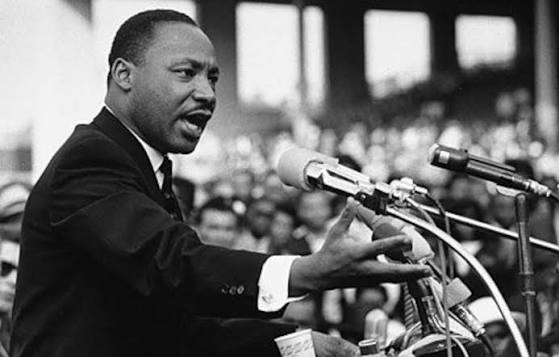
| Full Name | Martin Luther King Jr. (born Michael King Jr.) |
| Date of Birth | January 15, 1929 |
| Place of Birth | Atlanta, Georgia, United States |
| Date of Death | April 4, 1968 |
| Age at Death | 39 |
| Nationality | American |
| Occupation | Baptist Minister, Civil Rights Leader |
Martin Luther King Jr. was the most prominent leader of the American civil rights movement from 1955 until his assassination in 1968. He is historically pivotal for advancing civil rights through nonviolent resistance and civil disobedience, inspired by his Christian beliefs and the nonviolent activism of Mahatma Gandhi. His assassination abruptly ended his expanding crusade against poverty and the Vietnam War, cementing his legacy as a global symbol of peace and equality while deeply fracturing the American social fabric.
Cause of Death
Martin Luther King Jr. was assassinated by a single gunshot on April 4, 1968, in Memphis, Tennessee.
The official cause of death was a gunshot wound to the right side of the face and neck. The bullet shattered his jaw, severed his right jugular vein and major arteries, and fractured his spine before lodging in his shoulder.
The events leading to his death occurred during King’s visit to Memphis to support striking Black sanitation workers. At 6:01 p.m., King was standing on the second-floor balcony of the Lorraine Motel outside Room 306. He was leaning over the railing to speak with his colleague Jesse Jackson and musician Ben Branch, famously asking Branch to play the hymn “Take My Hand, Precious Lord” at a meeting later that evening.
Suddenly, a shot rang out. The bullet, fired from a .30-06 caliber Remington Model 760 rifle, struck King forcefully, throwing him backward onto the balcony floor. His colleagues immediately rushed to his side to apply towels to stem the massive bleeding. He was rushed to St. Joseph’s Hospital, where emergency surgery was attempted, but he never regained consciousness. He was pronounced dead at 7:05 p.m.
The official and legally confirmed account is that the shot was fired by James Earl Ray, an escaped convict, from the bathroom window of a boarding house located across the street from the Lorraine Motel. Ray’s fingerprints were found on the rifle and a pair of binoculars abandoned near the scene. However, claims of a broader conspiracy involving the FBI, the mafia, and the US military have been persistently debated and were even supported by the King family in a 1999 civil trial, though the US Department of Justice maintains there is no reliable evidence of a government plot.
Biography: Why the Person Was Killed (or Why/How the Person Died)
Martin Luther King Jr.’s assassination was the violent terminus of a 13-year career that fundamentally disrupted the racial and economic hierarchy of the United States. Born into a lineage of Baptist ministers in segregated Atlanta, King was thrust into the national spotlight in 1955 when he was chosen to lead the Montgomery bus boycott following Rosa Parks’s arrest. The boycott’s success catapulted him to leadership within the newly formed Southern Christian Leadership Conference (SCLC).
Over the next decade, King became the moral conscience of the nation. He organized peaceful protests in Birmingham, led the monumental 1963 March on Washington where he delivered his “I Have a Dream” speech, and spearheaded the Selma to Montgomery marches. His relentless activism was the primary catalyst for the passage of the landmark Civil Rights Act of 1964 and the Voting Rights Act of 1965, which legally dismantled Jim Crow segregation and guaranteed voting rights for Black Americans.
However, it was King’s ideological shift in the final years of his life that placed him in unprecedented danger and expanded his list of enemies. Following the legislative victories of 1964 and 1965, King moved his focus from Southern segregation to the systemic issues of economic injustice and militarism plaguing the entire nation, including the urban North. He launched the Chicago Freedom Movement to combat slum housing and economic discrimination.
Most dangerously, on exactly one year before his death—April 4, 1967—King delivered his “Beyond Vietnam: A Time to Break Silence” speech at Riverside Church in New York City. He unequivocally condemned the US war in Vietnam, calling the US government “the greatest purveyor of violence in the world today.” This alienated his political allies, including President Lyndon B. Johnson, and enraged the mainstream press. The FBI, under the direction of J. Edgar Hoover, had already been surveilling King via the COINTELPRO program, viewing him as a dangerous subversive. Following the Vietnam speech, Hoover’s efforts to destroy King’s reputation intensified.
By early 1968, King was organizing the “Poor People’s Campaign,” a massive march on Washington aiming to unite poor people of all races—Black, white, Hispanic, and Native American—to demand an “economic bill of rights” and an annual guaranteed income. To the establishment, this cross-racial class coalition was significantly more threatening than his earlier desegregation efforts.
It was in this tense atmosphere that King diverted his attention to Memphis in March 1968 to support 1,300 striking Black sanitation workers demanding better wages and union recognition. An initial march in late March descended into violence and rioting, which deeply depressed King and gave his critics ammunition to claim his nonviolent movement had failed. Determined to prove that a peaceful protest was possible, King returned to Memphis in early April.
His profound challenge to the status quo—combining anti-racism, anti-capitalism, and anti-imperialism—made him a prime target for white supremacists. James Earl Ray, a racist fugitive, tracked King to Memphis and executed the fatal shot, bringing a violent end to King’s rapidly expanding crusade for human rights.
Achievements
Martin Luther King Jr.’s achievements dismantled centuries of legalized racial oppression in the United States.
• Leadership of the Montgomery Bus Boycott (1955-1956): King led the 381-day boycott that successfully ended racial segregation on public transit in Montgomery, Alabama, proving the efficacy of mass nonviolent direct action.
• Founding the SCLC (1957): As the first president of the Southern Christian Leadership Conference, King organized Black churches across the South to conduct nonviolent protests in the service of civil rights reform.
• The March on Washington (1963): King was a primary organizer of the march, which drew over 250,000 people. His “I Have a Dream” speech articulated the moral imperative of equality and is considered one of the greatest speeches in American history.
• Catalyst for Landmark Legislation: The public outcry generated by the SCLC’s campaigns in Birmingham (1963) and Selma (1965) directly pressured the federal government to pass the Civil Rights Act of 1964 and the Voting Rights Act of 1965.
• Nobel Peace Prize (1964): At age 35, King became the youngest person to win the Nobel Peace Prize for his nonviolent struggle against racial inequality, securing international legitimacy for the American civil rights movement.
Aftermath of the Death
The immediate public reaction to King’s assassination was one of profound grief and explosive rage. News of his death sparked the “Holy Week Uprising,” a wave of civil unrest, riots, and arson in more than 100 American cities, including Washington D.C., Chicago, and Baltimore. Tens of thousands of National Guard troops were deployed to quell the violence, resulting in over 40 deaths and extensive property damage.
President Lyndon B. Johnson declared a national day of mourning. In a rare moment of swift legislative action spurred by the tragedy, Congress passed the Civil Rights Act of 1968 (commonly known as the Fair Housing Act) just days after the assassination, prohibiting discrimination in housing and housing-related transactions.
King’s funeral in Atlanta was attended by an estimated 300,000 people. His casket was pulled by two mules on a simple wooden farm wagon, symbolizing his final campaign on behalf of the poor.
Following a massive two-month international manhunt involving the FBI and Interpol, James Earl Ray was captured at London’s Heathrow Airport. To avoid the electric chair, Ray pleaded guilty to the assassination in 1969 and was sentenced to 99 years in prison. However, three days later, Ray recanted his confession, claiming he was a patsy in a larger conspiracy orchestrated by a man he knew only as “Raoul.”
The question of justice remains legally settled but culturally contested. The 1979 report by the House Select Committee on Assassinations (HSCA) concluded that Ray fired the shot but suggested a “likelihood” of a broader conspiracy, possibly involving a bounty offered by white supremacist groups. In 1999, a Memphis civil jury found that Loyd Jowers (a local restaurant owner) and “others, including government agencies” were part of a conspiracy to assassinate King. Despite this, official DOJ investigations maintain Ray was the lone shooter.
Critical Stories People Need to Know About the Death
1. The “Mountaintop” Prophecy
The night before his death, King delivered his final, eerily prophetic speech, “I’ve Been to the Mountaintop,” at the Mason Temple in Memphis. Addressing the constant death threats against him, he declared that he had “seen the Promised Land,” but added, “I may not get there with you.” Many present believed King sensed his impending murder.
2. The FBI Suicide Letter
In 1964, the FBI, under J. Edgar Hoover, mailed an anonymous, threatening package to King’s home. It contained audio recordings of King’s extramarital affairs, accompanied by a letter urging him to commit suicide before receiving the Nobel Peace Prize. This intense surveillance and psychological warfare fuel lingering suspicions about FBI involvement in his death.
3. The Last-Minute Room Change
King was originally scheduled to stay in an interior courtyard room at the Lorraine Motel. However, the reservation was inexplicably changed to Room 306, a second-floor room with an exposed balcony facing the street. This change gave the assassin a clear line of sight.
4. James Earl Ray’s Escape and Capture
After the shooting, James Earl Ray managed to evade capture for two months. He fled to Canada, acquired a fake Canadian passport under the name Ramon George Sneyd, and flew to London. He was attempting to board a flight to Rhodesia (now Zimbabwe), a white-minority-ruled nation, when an eagle-eyed customs officer in London flagged his fake passport.
5. The Mystery of “Raoul”
For his entire life in prison, Ray claimed he did not shoot King. He alleged that a mysterious gun smuggler named “Raoul” directed him to buy the rifle, instructed him to rent the room across from the motel, and set him up as the fall guy. Despite extensive FBI searches, “Raoul” was never definitively identified.
6. The Recantation of Coretta Scott King
In an extraordinary twist, King’s widow, Coretta Scott King, and his children publicly supported James Earl Ray’s request for a retrial in the 1990s. The King family came to believe that Ray was innocent and that a massive government conspiracy was responsible for the assassination.
7. The 1999 Civil Trial Verdict
In 1999, the King family sued Loyd Jowers, a Memphis man who claimed he was paid to facilitate the assassination, in civil court for wrongful death. The jury surprisingly found Jowers and “unknown co-conspirators” guilty. The King family requested only $100 in damages, viewing the verdict as a vindication of their belief in a government conspiracy.
8. The 2000 Department of Justice Report
Following the 1999 civil verdict, US Attorney General Janet Reno launched a new investigation. Released in 2000, the DOJ report firmly rejected the jury’s findings, concluding that Jowers’s claims were entirely fabricated for financial gain and that there was no credible evidence of a government-led conspiracy.
9. The Immediate Legislative Impact
While the assassination sparked riots, it also broke a legislative filibuster. President Lyndon B. Johnson used the national tragedy to pressure Congress into immediately passing the Civil Rights Act of 1968, which banned discrimination in the sale or rental of housing, marking the final major legislative victory of the civil rights era.
10. The Unfinished Poor People’s Campaign
King died while organizing the Poor People’s Campaign. Weeks after his death, his widow and the SCLC went forward with the plan, setting up a protest camp called “Resurrection City” on the Washington Mall. Without King’s charismatic leadership, however, the camp suffered from poor weather and disorganized leadership, ultimately failing to achieve its sweeping economic goals.
References
• Encyclopaedia Britannica. “Martin Luther King, Jr. | Biography, Speeches, Assassination, & Facts.” Britannica.
• Branch, Taylor. Parting the Waters: America in the King Years 1954-63. Simon & Schuster, 1988.
• Garrow, David J. Bearing the Cross: Martin Luther King, Jr., and the Southern Christian Leadership Conference. William Morrow, 1986.
• National Archives and Records Administration. “Assassination of Martin Luther King, Jr.” (Select Committee on Assassinations, U.S. House of Representatives).
• United States Department of Justice. “United States Department of Justice Investigation of Recent Allegations Regarding the Assassination of Dr. Martin Luther King, Jr.” June 2000.
• Associated Press. “Ray’s brother tells of escaping after King murder.” April 4, 1998.
• The New York Times. “Jury Finds a Conspiracy in the Assassination of Dr. King.” December 9, 1999.
• BBC News. “1968: Martin Luther King shot dead.” April 4, 1968.