

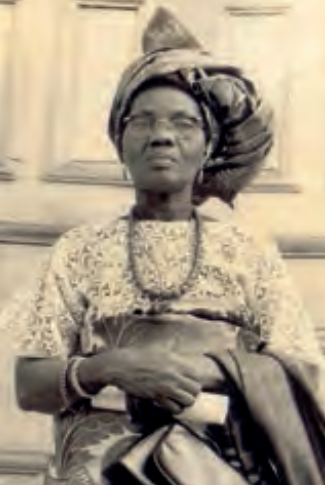
| Full Name | Chief Funmilayo Ransome-Kuti (born Frances Abigail Olufunmilayo Thomas) |
| Date of Birth | October 25, 1900 |
| Place of Birth | Abeokuta, Egba Kingdom (now Ogun State, Nigeria) |
| Date of Death | April 13, 1978 |
| Age at Death | 77 |
| Nationality | Nigerian |
| Occupation | Educator, Political Campaigner, Women’s Rights Activist |
Funmilayo Ransome-Kuti was a pioneering African feminist, political leader, and educator who became one of the most formidable anti-colonial activists in Nigerian history. Known as the “Lioness of Lisabi,” she led massive women’s revolts against British taxation and traditional patriarchal authorities. Tragically, her life was cut short by the brutal violence of the post-colonial Nigerian military regime, cementing her legacy as a martyr for political freedom and human rights.
Cause of Death
Funmilayo Ransome-Kuti died on April 13, 1978, at the Lagos General Hospital from severe complications and injuries sustained during a violent military raid on her son’s compound over a year earlier.
The events leading to her death occurred on February 18, 1977. Her son, the globally renowned Afrobeat musician and political dissident Fela Anikulapo-Kuti, lived in a compound in Lagos that he had declared an independent state, known as the Kalakuta Republic. Following a minor traffic dispute involving Fela’s associates and military personnel, an estimated 1,000 armed soldiers acting under the orders of the Nigerian military junta surrounded and stormed the compound.
During the siege, the soldiers brutally beat residents, sexually assaulted women, and set the compound on fire. In the chaos, soldiers breached the main house. The 76-year-old Funmilayo Ransome-Kuti was physically grabbed by military personnel and thrown from a second-floor window.
She sustained a fractured leg and severe head trauma, lapsing into a coma. Although she briefly regained consciousness in the ensuing months, her health rapidly deteriorated due to the trauma of the fall. She officially succumbed to these injuries on April 13, 1978.
Despite the horrific public nature of the attack, the official government inquiry set up by the military regime under General Olusegun Obasanjo concluded that the compound had been attacked by “unknown soldiers,” effectively absolving the military of the murder and arson. This deeply disputed verdict remains one of the most notorious miscarriages of justice in Nigerian history.
How she Died
Funmilayo Ransome-Kuti was born into an aristocratic family in Abeokuta. She was the first female student to attend the Abeokuta Grammar School and later pursued higher education in England. During her time in Britain, she encountered pervasive racism and was radicalized against British imperialism. She dropped her English names, Frances Abigail, and fully embraced her Yoruba identity, demanding to be addressed exclusively as Funmilayo.
Upon returning to Nigeria, she became a teacher and married Reverend Israel Oludotun Ransome-Kuti, a fellow educator and unionist. Together, they formed a formidable intellectual partnership. Funmilayo recognized the severe exploitation of Nigerian women by the colonial system, which had stripped them of their pre-colonial economic power and political representation.
Her immense historical significance stems from her ability to mobilize the masses. In 1946, she founded the Abeokuta Women’s Union (AWU), uniting working-class market women and educated middle-class women into a fiercely disciplined political force. The AWU vehemently opposed the flat-rate tax imposed on women by the British colonial administration, which was collected by the Alake (the traditional ruler) of Egbaland, Sir Ladapo Ademola II.
Under her leadership, the AWU staged massive protests, sit-ins, and boycotts. They famously organized a protest of over 10,000 women who surrounded the Alake’s palace. Her campaign was so relentless and well-organized that it forced the British administration to abolish the tax and forced the Alake to temporarily abdicate his throne in 1948.
Following independence, Ransome-Kuti continued her activism, travelling to the Soviet Union and China during the Cold War to lecture on the emancipation of African women, which led to her passport being seized by the Nigerian government and drawing the ire of Western intelligence agencies.
However, the circumstances that led to her death were tied to her unwavering support for her sons—Fela, Beko, and Olikoye. Fela Kuti used his music to fiercely critique the corruption, brutality, and neocolonialism of the Nigerian military regimes of the 1970s. Funmilayo lived with Fela at the Kalakuta Republic, serving as the matriarch of the commune.
To the military government led by General Olusegun Obasanjo, Fela was a deeply dangerous subversive, and the Kalakuta Republic was a defiant eyesore. The February 1977 raid was ostensibly sparked by a minor traffic infraction, but historians widely agree it was a premeditated military operation designed to crush Fela’s opposition and silence his influential family. Funmilayo Ransome-Kuti, the aging Lioness of Lisabi, was swept up in this punitive violence, becoming a casualty of the military dictatorship’s intolerance for dissent.
Achievements
Funmilayo Ransome-Kuti’s lifetime of activism dismantled colonial structures and shattered gender barriers in Nigeria.
• First Woman to Drive a Car in Nigeria: As a symbol of her independence and rejection of traditional gender norms, she became the first Nigerian woman to drive a car, inspiring a generation of women to break into male-dominated spaces.
• Leading the Egba Women’s Tax Revolt: Through the AWU, she successfully orchestrated the abolition of oppressive colonial taxes on women and forced the abdication of the Alake of Egbaland, a virtually unprecedented feat of grassroots organizing.
• Advocating Universal Suffrage: She was the only woman in the Nigerian delegation to London in 1947 to lodge a formal protest against the Richards Constitution, fiercely advocating for women’s voting rights and representation in government.
• International Diplomacy and Peace Awards: Her global advocacy for women’s rights and anti-imperialism earned her the Lenin Peace Prize in 1970, highlighting her influence on the international stage during the Cold War.
• Founding the Federation of Nigerian Women’s Societies: In 1953, she founded this organization to unite women’s groups across ethnic and regional lines to push for women’s enfranchisement nationwide.
Aftermath of the Death
The death of Funmilayo Ransome-Kuti sent shockwaves through Nigeria. Her passing was mourned by activists across the continent, who recognized the deep tragedy of a woman who had fought so hard for the nation’s independence being killed by its own post-colonial military.
The government response was characterized by aggressive denial and a lack of accountability. A board of inquiry was established to investigate the destruction of the Kalakuta Republic, but it notoriously concluded that the compound was burned down and the violence committed by an “exasperated and unknown soldier.” No one was ever arrested, charged, or prosecuted for her murder or the assault on the commune.
The most profound historical consequence of her death was the radicalization of her son, Fela Kuti. On the first anniversary of her death in 1979, Fela and his supporters took a replica of her coffin and boldly marched it directly to the gates of the Dodan Barracks in Lagos, the fortified headquarters of General Olusegun Obasanjo, the Head of State. Fela deposited the coffin at the gates to confront the regime with their crime.
Fela subsequently released the scathing, mournful song “Coffin for Head of State,” directly accusing Obasanjo and Major General Shehu Musa Yar’Adua of murdering his mother. The trauma of her death permanently scarred the Ransome-Kuti family, but it also solidified their status as Nigeria’s premier dynasty of human rights defenders.
Critical Stories People Need to Know About the Death
1. The First Woman to Drive a Car
Long before the military raid, Ransome-Kuti made history simply by driving. In colonial Nigeria, automobiles were a luxury strictly reserved for British officials, traditional monarchs, and wealthy men. By learning to drive and purchasing a car, she publicly shattered the intersecting barriers of race and gender, asserting that African women were entitled to mobility, modernity, and visible public space.
2. The Egba Women’s Tax Revolt
In 1947, market women in Abeokuta were being driven into poverty by severe taxes. Ransome-Kuti organized “picnics”—which were actually massive political rallies—to bypass British bans on protests. She taught the women to use their traditional cultural power, utilizing songs of ridicule and staging sit-ins that ultimately forced the local monarch, who acted as the British tax collector, into exile.
3. The “Unknown Soldier” Verdict
Following the total destruction of the Kalakuta Republic and the fatal injuries inflicted on Ransome-Kuti, the Nigerian military established an inquiry. In a brazen display of impunity, the tribunal ruled that the identity of the 1,000 soldiers could not be determined, creating the infamous legal fiction of the “Unknown Soldier.” This phrase remains a bitter symbol of state-sponsored injustice in Nigeria today.
4. Coffin for Head of State
Fela Kuti’s grief over his mother’s death resulted in one of the most daring protests in African history. In 1979, he carried her coffin to Dodan Barracks, the seat of military power. The guards refused them entry, so Fela left the coffin on the pavement. The subsequent song he released detailed the hypocrisy of religious and political leaders who turned a blind eye to the murder of an independence heroine.
5. Dropping Her European Names
A vital aspect of her political awakening occurred in the UK. She was baptized Frances Abigail, but after experiencing British racism, she dropped the names entirely. This was a radical act of decolonization in the 1920s, signaling a fierce pride in Yoruba heritage that she passed down to her children, who also eschewed European names and conventions.
6. The Seizure of Her Passport
During the 1950s, Ransome-Kuti traveled to the Soviet Union, China, and Hungary to build international coalitions for women’s rights. The British and American governments labeled her a communist threat. In 1956, the Nigerian government refused to renew her passport to prevent her from traveling to international socialist conferences, attempting to isolate her from the global anti-imperialist movement.
7. A Dynasty of Activism
Ransome-Kuti’s influence extended directly through her children. Fela became a global musical and political icon; Dr. Beko Ransome-Kuti became a leading human rights campaigner who was frequently jailed by military dictators; and Professor Olikoye Ransome-Kuti served as a highly respected Minister of Health. The violent attack on their mother only galvanized the brothers’ lifelong resistance against military rule.
8. The Legacy of the Kalakuta Republic
The Kalakuta Republic was not just a home; it was a sanctuary for dissidents, artists, and the urban poor, providing free healthcare and a space free from police harassment. The military’s decision to destroy the compound, and throw the 76-year-old matriarch out of a window, was a calculated attempt to annihilate the physical and moral center of Nigerian political resistance.
References
• Johnson-Odim, Cheryl, and Nina Emma Mba. For Women and the Nation: Funmilayo Ransome-Kuti of Nigeria. University of Illinois Press, 1997.
• Encyclopaedia Britannica. “Funmilayo Ransome-Kuti | Nigerian feminist and political leader.” Britannica Academic.
• UNESCO. “Funmilayo Ransome-Kuti and the Women’s Union of Abeokuta.” UNESCO Series on Women in African History, 2014.
• Moore, Carlos. Fela: This Bitch of a Life. Allison & Busby, 1982.
• Al Jazeera. “Funmilayo Ransome-Kuti: The Lioness of Lisabi.” October 2020.
• BBC News. “Fela Kuti: The man who stood up to Nigeria’s military.” August 2, 2017.