
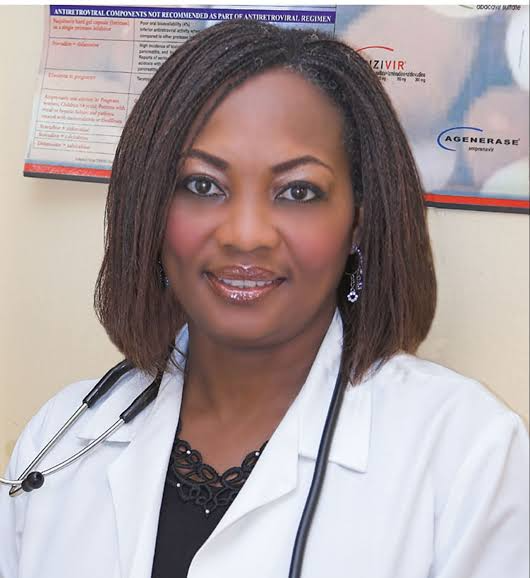
| Full Name | Ameyo Stella Adadevoh |
| Date of Birth | October 27, 1956 |
| Place of Birth | Lagos, Nigeria |
| Date of Death | August 19, 2014 |
| Age at Death | 57 |
| Nationality | Nigerian |
| Occupation | Lead Consultant Physician and Endocrinologist |
Dr. Ameyo Stella Adadevoh was a distinguished Nigerian physician who is historically revered for preventing a catastrophic nationwide spread of the Ebola virus in 2014. Her heroic refusal to release the index patient, despite immense pressure and at the ultimate cost of her own life, saved Africa’s most populous nation from a devastating epidemic.
Cause of Death
The official cause of Dr. Ameyo Adadevoh’s death was Ebola virus disease. She died on August 19, 2014, at an isolation facility in Lagos, Nigeria.
The events leading to her death began when she unknowingly contracted the highly infectious disease while treating a Liberian-American patient, Patrick Sawyer, who was the index patient for Ebola in Nigeria.
Sawyer was admitted to the First Consultants Medical Center and initially diagnosed with malaria. However, during her ward round, Dr. Adadevoh correctly suspected Ebola, despite having never seen a case of it before. While awaiting confirmation test results, she created a makeshift isolation area by raising a wooden barricade outside Sawyer’s door, as the hospital lacked proper protective equipment.
In the process of providing care with limited resources, Dr. Adadevoh and her team were exposed to the virus. A total of 11 healthcare workers were infected at the hospital; tragically, five of them, including Dr. Adadevoh, lost their lives to the disease. There are no disputes regarding the facts of her death, which were widely documented by global health authorities and the Nigerian Ministry of Health.
Biography: Why the Person Was Killed (or Why/How the Person Died)
Dr. Ameyo Adadevoh was born in Lagos, Nigeria, into a highly distinguished family. She was the great-granddaughter of Herbert Macaulay, a founding father of Nigerian nationalism, and the grand-niece of Nnamdi Azikiwe, Nigeria’s first president. She graduated from the University of Lagos College of Medicine with an MBBS degree in 1980 and later completed a fellowship in endocrinology at Hammersmith Hospital in London. She spent 21 years working as the Lead Consultant Physician at First Consultants Medical Center in Lagos, where she was known for her exceptional dedication to her patients.
Her significance in history stems from her profound clinical intuition and unyielding ethical stance. In 2012, she had already proven her vigilance by being the first to alert the Nigerian Ministry of Health about the spread of H1N1 (swine flu).
In July 2014, the circumstances that placed her in mortal danger unfolded when Patrick Sawyer arrived in Lagos. Sawyer insisted he merely had a bad case of malaria and demanded to be discharged so he could attend a business conference in Calabar.
Recognizing the catastrophic threat he posed, Dr. Adadevoh firmly resisted immense pressure. She faced direct threats from Liberian officials and the ambassador, who threatened to sue her for kidnapping and violating Sawyer’s human rights for holding him against his will. Standing her ground, she famously declared that she would not release him “for the greater public good”.
Her courageous stand ensured that Sawyer could not walk out into the densely populated city of Lagos. By absorbing the risk, she and her staff acted as the physical barrier between the deadly virus and a population of over 190 million people. Her death was the direct result of fulfilling her medical oath to protect the public health under extraordinary and perilous circumstances.
Achievements
Dr. Adadevoh’s legacy is defined by her medical vigilance and unmatched dedication to public health.
• Preventing a National Ebola Epidemic: Her correct clinical diagnosis and refusal to discharge the index patient ensured that all 20 Ebola cases in Nigeria were traced back to a single line of transmission. This prevented an explosive spread across Africa’s most populous nation.
• Early Detection of H1N1 (Swine Flu): In 2012, she was the first doctor to alert the Nigerian Ministry of Health to the presence of H1N1 in the country, demonstrating her consistent vigilance.
• Inspiring Health Policy Reform: Her sacrifice became the catalyst for the Nigerian government to quickly mobilize resources, establish an Ebola Emergency Operations Center, and significantly improve national infection control protocols.
Aftermath of the Death
The public reaction to her death was one of profound grief and immense gratitude. Nigerians widely regarded her as a national savior who sacrificed her life for the country.
Due directly to her swift reporting, the Nigerian government declared a national public health emergency and established an Ebola Emergency Operations Center. This allowed them to meticulously trace all possible contacts of the index patient. As a result, the World Health Organization officially declared Nigeria Ebola-free on October 20, 2014, a massive triumph in global health.
Following her passing, her family established the Dr. Ameyo Stella Adadevoh (DRASA) Health Trust. The organization is dedicated to continuing her legacy by improving hygiene, sanitation, and outbreak preparedness across Nigeria.
Critical Stories People Need to Know About the Death
1. The Initial Misdiagnosis
Patrick Sawyer had initially been admitted for malaria the day before Dr. Adadevoh saw him. It was only during her ward round that she immediately suspected Ebola, despite the fact that the disease had never been recorded in Nigeria.
2. Threats of Legal Action
Dr. Adadevoh faced severe intimidation while awaiting test result. Liberian government officials pressured her to discharge Sawyer and threatened to sue her for “kidnapping” and human rights violations. She steadfastly refused to bow to diplomatic pressure.
3. The Makeshift Barricade
The First Consultants Medical Center was not equipped to handle a highly infectious hemorrhagic fever. In a desperate bid to protect the public and her staff, Dr. Adadevoh improvised an isolation area by erecting a wooden barricade outside the patient’s door.
4. A Nation on Strike
At the precise time these events were unfolding, Nigerian doctors were on a nationwide strike. If Sawyer had been released and visited other clinics or hospitals, the lack of available medical professionals would have led to an unprecedented health catastrophe.
5. The Tragic Toll on Healthcare Workers
The containment of Ebola in Nigeria came at a steep price for the medical staff. Out of the 20 total confirmed cases in the country, 11 were healthcare workers from her hospital. Six of them survived, but five paid the ultimate price.
6. A Lineage of Leaders
Dr. Adadevoh’s heroism mirrored the legacy of her ancestors. Her great-grandfather, Herbert Macaulay, is considered the founder of Nigerian nationalism, and she was the grand-niece of the nation’s first president, Nnamdi Azikiwe. She worked in a hospital where a statue of her great-grandfather stands.
7. The DRASA Health Trust
To ensure her sacrifice was not in vain, her family channeled their grief into action by launching the DRASA Health Trust in 2015. The organization actively works to keep Nigerians safe from public health threats by training health workers and engaging communities.
8. The Ultimate Patriot
Dr. Adadevoh’s story represents the ultimate power of individual responsibility. She had the option to discharge the difficult patient and avoid conflict, but she explicitly chose “the greater public good” over her own safety, establishing an enduring legacy of medical ethics and courage
References
• DRASA Health Trust. “Dr Ameyo Stella Adadevoh.” DRASA Trust.
• CEPI. “The woman who helped to stop an Ebola epidemic in Nigeria.” CEPI.net
• Wikipedia. “Ameyo Adadevoh.”
• PubMed. “One Woman, One Nation: The Heroic Story of Dr. Stella Adadevoh.”
• Channels Television. “Ebola: Senior Doctor, Ameyo Adadevoh Dies.” August 19, 2014.