
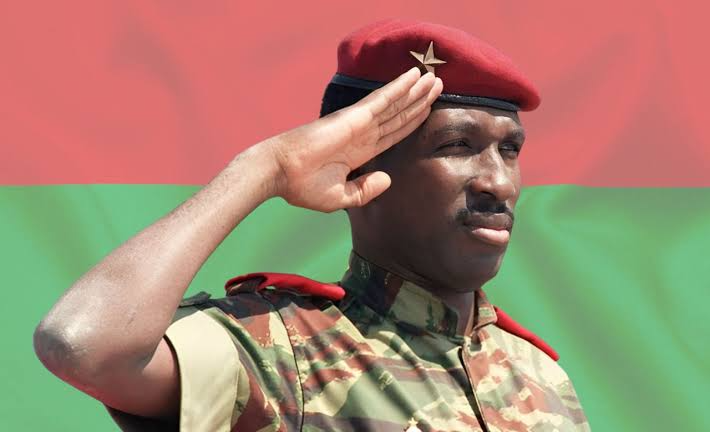
| Full Name | Thomas Isidore Noël Sankara |
| Date of Birth | 21 December 1949 |
| Place of Birth | Yako, French Upper Volta |
| Date of Death | 15 October 1987 |
| Age at Death | 37 |
| Nationality | Burkinabé |
| Occupation | First President of Burkina Faso, Military Officer, Revolutionary |
Thomas Sankara was a Marxist and Pan-Africanist revolutionary who served as the first President of Burkina Faso from 1983 until his assassination in 1987. Widely revered as “Africa’s Che Guevara,” he spearheaded one of the most sweeping programs for social and economic reform ever attempted on the African continent, fiercely rejecting foreign aid and imperialism. His brutal assassination by forces loyal to his closest friend cut short his vision, but transformed him into an enduring continental hero and a symbol of resistance against neocolonialism.
Cause of Death
The official cause of Thomas Sankara’s death was execution by gunfire, legally recorded as an assassination. He was murdered on October 15, 1987, at the Conseil de l’Entente headquarters in Ouagadougou, Burkina Faso.
The events leading to his death unfolded with sudden violence. At approximately 4:30 p.m., Sankara was chairing a meeting with his aides in a small room at the headquarters. A heavily armed hit squad in military uniform arrived in the courtyard outside and immediately opened fire, killing Sankara’s driver and two bodyguards. Hearing the shots, Sankara instructed his collaborators to remain inside for their safety, declaring, “It’s me they want”. He exited the room with his hands raised to face his attackers. The hit squad, led by Corporal Hyacinthe Kafando and Corporal Nadié, immediately sprayed him with automatic weapons fire. Ballistics experts later testified that Sankara was shot in the chest at least seven times with tracer rounds; one bullet entered just beneath his armpit, medically corroborating that he died with his arms raised in surrender. Sankara died instantly without uttering another word.
The hit squad then stormed the meeting room, slaughtering 12 other individuals present. Only one person, Alouna Traoré, survived the massacre by pretending to be dead.
The assassination was orchestrated by troops loyal to Blaise Compaoré, Sankara’s former friend and deputy, under the direct operational command of General Gilbert Diendéré. In an attempt to cover up the crime, Compaoré’s subsequent regime forced a doctor to falsify Sankara’s death certificate to state that the 37-year-old had died of “natural causes”. There are no disputes regarding the mechanical facts of his death, which were definitively proven by a 2015 forensic exhumation and a 2022 military tribunal.
Biography: Why the Person Was Killed (or Why/How the Person Died)
Thomas Sankara was born in Yako, French Upper Volta, to a family of relative privilege; his father was an auxiliary gendarme for the colonial state. Sankara entered military service at 19 and was later sent to Madagascar for officer training. There, he witnessed popular uprisings in 1971 and 1972 and began reading the works of Karl Marx and Vladimir Lenin, which permanently shaped his anti-imperialist worldview. He gained national fame for his heroic performance during a 1974 border war with Mali, though he later publicly denounced the conflict as “useless and unjust”.
Sankara ascended to the presidency on August 4, 1983, following a popularly supported coup organized by his close friend, Blaise Compaoré. Sankara immediately initiated the “Democratic and Popular Revolution,” a radical movement aimed at eradicating corruption, ending imperial domination, and achieving absolute national self-sufficiency. On the first anniversary of his rule, he changed the country’s colonial name from Upper Volta to Burkina Faso, meaning “the land of upright people”.
Sankara’s uncompromising vision quickly placed him in immense danger. Domestically, his aggressive reforms dismantled traditional power structures. He redistributed land from powerful feudal landlords directly to peasants, stripped traditional chiefs of their privileges, and demanded extreme austerity from public servants. He slashed the salaries of government officials, sold the state’s fleet of luxury Mercedes cars in favor of the cheap Renault 5, and banned first-class airline travel. This alienated corrupt elites and “revolutionaries of convenience” who had sought power for personal enrichment.
Externally, Sankara’s policies deeply threatened Western powers, particularly France, the former colonial master. Sankara vehemently rejected foreign aid and the influence of institutions like the International Monetary Fund and the World Bank, stating that “he who feeds you, controls you”. He publicly condemned French arms deliveries, insulted French President Jacques Chirac over his support for the apartheid regime in South Africa, and forged alliances with nations like Cuba and Libya, alarming Western intelligence agencies during the Cold War.
As political fatigue set in among the populace, an internal crisis erupted between Sankara and Compaoré. Sankara wished to create a unified political party incorporating diverse revolutionary movements, while Compaoré—backed by factions of the military he controlled—wanted to purge opposing elements to consolidate power. Aware of the heavy atmosphere and the plots against him, Sankara refused to strike first, noting that his enemies were relying on maneuvers rather than political debate.
The ideological split culminated in the October 15, 1987 coup. Compaoré seized power, immediately reversing Sankara’s socialist policies and re-aligning Burkina Faso with Western economic interests. While history confirms that Compaoré ordered the hit squad, debate persists regarding the extent of foreign involvement; many historians and witnesses allege that France, the CIA, and regional leaders like Côte d’Ivoire’s Félix Houphouët-Boigny provided logistical support or tacit approval for the assassination.
Achievements
Thomas Sankara accomplished an unprecedented socio-economic transformation in merely four years.
• Pioneering Women’s Rights: Sankara was the first political leader in West Africa to appoint a significant number of women to cabinet positions and the military. He decisively outlawed female genital mutilation, forced marriages, and polygamy, and mandated a day of solidarity where husbands were required to perform household chores.
• Mass Public Health Campaigns: Within his first year, his government launched a sweeping vaccination drive that inoculated 2.5 million children against meningitis, yellow fever, and measles in just a few weeks. This initiative successfully slashed the infant mortality rate from 208 to 145 deaths per 1,000 births. He also mandated that every village construct a medical dispensary.
• Achieving Food Self-Sufficiency: By redistributing land from feudal landlords to local farmers and implementing massive irrigation and fertilizer programs, Burkina Faso transitioned from a net food importer to being entirely self-sufficient. Wheat production doubled from 1,700 kg to 3,800 kg per hectare within three years.
• Environmental Preservation: Years ahead of global climate movements, Sankara launched a massive reforestation program to halt the desertification of the Sahel, resulting in the planting of over 10 million trees.
• Educational Expansion: He initiated a nationwide literacy campaign that drastically improved education access. School attendance jumped from 10% to nearly 25%, and the national literacy rate skyrocketed from 13% to 73%.
• Infrastructural Independence: Eschewing all foreign aid, Sankara mobilized domestic labor to construct schools, hospitals, water reservoirs, and an extensive network of roads and railways to connect the impoverished nation.
Aftermath of the Death
Blaise Compaoré quickly assumed power on the evening of the assassination, initially denying involvement by claiming he was sick at home. He established a regime that ruled Burkina Faso for 27 years, during which discussing Sankara’s death was strictly taboo. Sankara’s loyalists were systematically prosecuted, tortured, or forced into exile as Compaoré worked to tarnish his predecessor’s memory.
Internationally, Sankara’s murder cemented his status as a martyr. He became an icon for politically committed youth across Africa and the diaspora, revered much like Che Guevara.
In 2014, mass popular protests erupted in Burkina Faso when Compaoré attempted to extend his 27-year rule. The uprising successfully ousted Compaoré, forcing him to flee to Côte d’Ivoire, where he took up Ivorian citizenship to evade extradition.
His departure finally paved the way for justice. A judicial investigation was opened, leading to the exhumation of Sankara’s remains in 2015. In October 2021, a military tribunal commenced in Ouagadougou, trying 14 individuals for the massacre.
On April 6, 2022, after a 34-year wait, the military court delivered its verdict. Blaise Compaoré was found guilty of complicity in murder and harming state security, receiving a life sentence in absentia. The hit squad leader, Hyacinthe Kafando (also tried in absentia), and General Gilbert Diendéré were likewise sentenced to life imprisonment. The courtroom erupted in applause, and Sankara’s widow, Mariam Sankara, expressed deep satisfaction that the truth had finally been legally established.
Critical Stories People Need to Know About the Death
1. The Falsified Death Certificate
For nearly three decades, the Burkinabé government maintained the transparent lie that Sankara had died of “natural causes”. A doctor was coerced into signing the fraudulent death certificate. During the 2022 assassination trial, the doctor accused of this forgery was ultimately acquitted of the specific charge, though the violent reality of the murder was fully exposed to the public.
2. The Survival of Alouna Traoré
Of all the men present in the small meeting room at the Conseil de l’Entente, only one walked away alive. Alouna Traoré survived the automatic weapons fire by collapsing and pretending to be dead amidst the bodies of his slaughtered comrades. His consistent testimony over the decades provided the bedrock for investigators to reconstruct the exact timeline of the massacre.
3. The 2015 Forensic Exhumation
Because Compaoré refused to allow an investigation, Sankara’s remains lay undisturbed until a popular uprising ousted the regime. In October 2015, authorities finally permitted an autopsy. The forensic examination conclusively proved Sankara was riddled with bullets, including a shot directly under his armpit. This medical evidence proved that Sankara had indeed surrendered with his hands raised, exactly as witnesses described.
4. Sankara’s Meager Possessions
At the time of his assassination, an inventory of Sankara’s worldly possessions shocked the international community. Unlike other dictators who looted state coffers, the President owned a car, a refrigerator, three guitars, a broken-down freezer, a few bicycles, and approximately $400 in cash. He lived in a modest brick house and strictly wore locally produced cotton tunics, underscoring his absolute incorruptibility.
5. General Gilbert Diendéré’s French Honors
General Gilbert Diendéré was the main operational commander who ordered the hit squad to execute Sankara. Despite his central role in the bloodbath, Diendéré flourished under Compaoré’s regime, eventually becoming his chief of staff. Shockingly, during a visit to France in May 2008, the French government awarded Diendéré the rank of Knight of the Legion of Honour. Diendéré was the only major conspirator physically present at the 2022 trial to receive a life sentence.
6. The Charles Taylor Theory
Multiple witnesses, including former associates of Liberian warlord Charles Taylor, have testified that Taylor was involved in the assassination plot. Taylor allegedly approached Sankara in early 1987 for support to launch a rebellion in Liberia, which Sankara flatly refused. Consequently, Taylor reportedly aligned with Compaoré, Libya, and Côte d’Ivoire to eliminate Sankara. While highly prevalent, the Burkinabé judicial inquiry noted that the physical presence of Liberian fighters at the crime scene could not be definitively confirmed.
7. The Declassified French Archives Controversy
France’s role in the assassination remains a subject of intense scrutiny. In 2017, French President Emmanuel Macron promised to declassify and hand over French archives pertaining to Sankara’s death. However, the documents delivered to Ouagadougou consisted mostly of secondary diplomatic notes and explicitly lacked critical files from the cabinets of then-President François Mitterrand and Prime Minister Jacques Chirac. Researchers and activists accuse the French government of maintaining a “State lie” to protect its intelligence agencies.
8. The Enduring Legacy of the “Upright Man”
The violent murder of Sankara failed to erase his influence. Instead, it elevated him to the Pantheon of revolutionary figures. Today, Sankara’s prescient ideologies—warning against the dangers of “odious debt,” championing environmental preservation, and demanding gender equality—continue to inspire modern pan-African social movements and artists demanding genuine independence from Western hegemony.
References
• Encyclopaedia Britannica. “Thomas Sankara | Ideology, Achievements, Books, & Death.” Britannica.
• The Guardian. “Burkina Faso’s ex-president guilty of complicity in murder of predecessor.” April 6, 2022.
• Channels Television. “Burkina Faso Ex-President Bags Life Sentence For Sankara Killing.” April 6, 2022.
• Africa Is a Country. “October 15, 1987: The Murder of Thomas Sankara.” 2015.
• Jaffré, Bruno. “Who Killed Thomas Sankara?” and “26 Years ago, Thomas Sankara was assassinated.” ThomasSankara.net.
• Wikipedia, The Free Encyclopedia. “Thomas Sankara.”
• Committee for the Abolition of Illegitimate Debt (CADTM). “Justice for Thomas Sankara, Justice for Africa.”
• allAfrica. “Burkina Faso’s Compaoré Gets Life Sentence for Sankara’s Death.” April 2022.